
Timing Belt Replacement in Miami
We replace worn or overdue timing belts on Toyota, Honda, Subaru, and every Japanese and Korean make using OEM belts — and recommend doing the water pump at the same time to save labor. Every job is backed by our 12-month / 12,000-mile warranty.
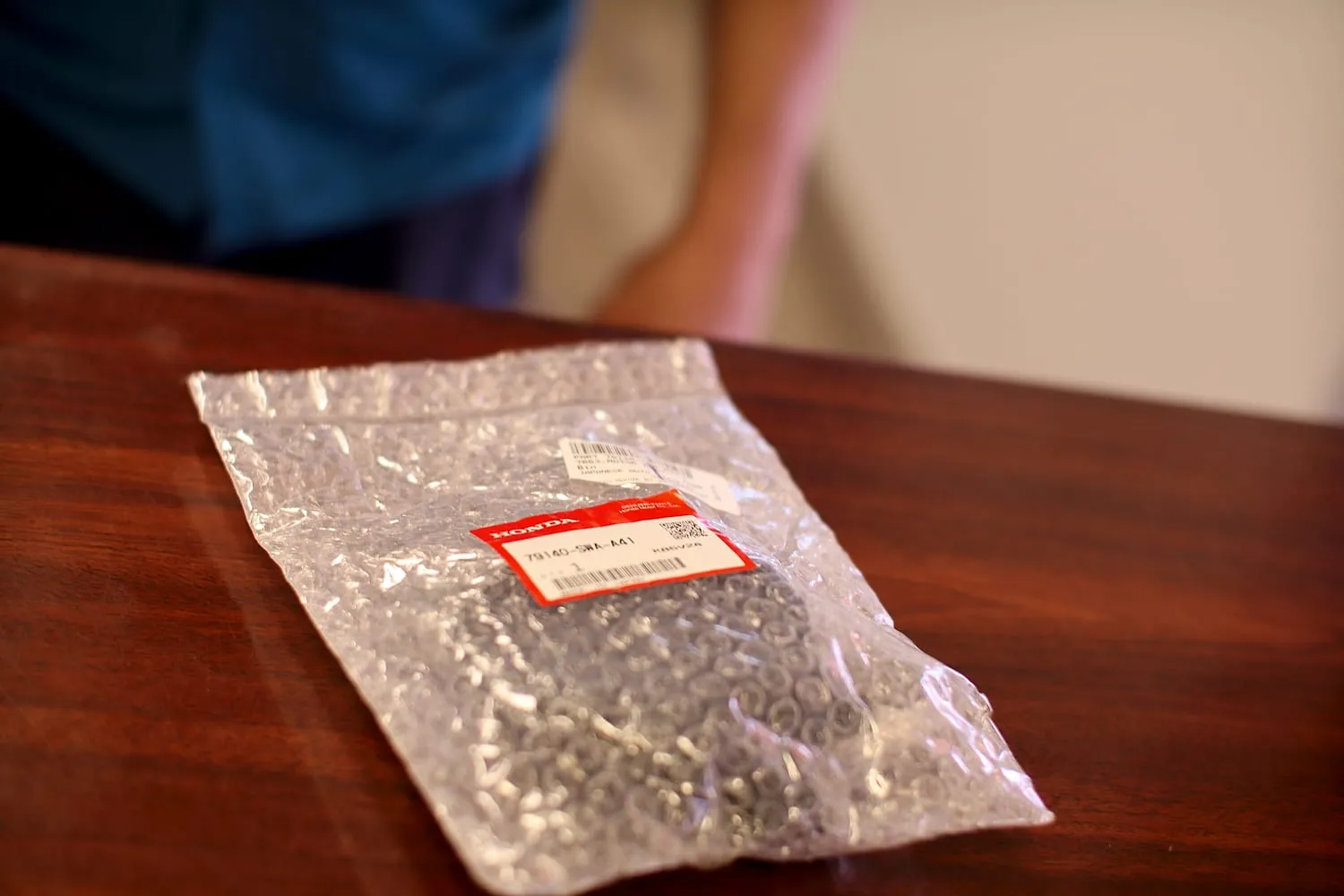
A timing belt keeps your engine’s valves and pistons in perfect sync, and on most Japanese belt-driven engines it needs replacing every 60,000–105,000 miles — or sooner if it’s cracked, glazed, or leaking oil. At Japanese Auto Tech we replace timing belts on Toyota, Honda, Subaru, Mitsubishi, and every other Japanese and Korean make using OEM belts and components, and we back every job with our 12-month / 12,000-mile warranty. We’ve kept Miami’s Japanese and Korean cars running right since 1998.
When should you replace your timing belt?
Timing belts wear on a schedule, not on symptoms — which is why the interval matters. Most Japanese belt engines call for replacement between 60,000 and 105,000 miles, or every 7 to 10 years, whichever comes first. In Miami that time limit is the one to watch: our heat and humidity dry out and crack rubber long before a belt racks up the miles, so a low-mileage car that sits in the sun can still be overdue. If you bought a used car with no service records, assume it’s due and let us inspect it.
Newer Japanese engines increasingly use a timing chain, which is built to last the life of the engine and isn’t on a replacement schedule. Not sure which one you have? We’ll tell you for free.
What are the signs of a failing timing belt?
Because belts usually fail without much warning, the smartest move is replacing on interval. But watch for these:
- A ticking or slapping noise from the front of the engine
- The engine cranks but won’t start — a sign the belt has slipped or snapped
- Rough running or misfires if the belt has jumped a tooth
- An oil leak at the front of the engine from a worn cam or crank seal
- Overheating or a coolant leak from a failing water pump behind the belt
Which Japanese engines are interference engines?
This is the part that makes timing belts urgent. On an interference engine, the valves and pistons share the same space at different moments. If the belt breaks, they collide — bending valves and sometimes damaging pistons and the cylinder head, turning a routine belt job into a major engine repair. On a non-interference engine the car simply stalls with no internal damage.
Many of the most common Japanese belt engines are interference designs, including the Honda and Acura J-series 3.0–3.7L V6, the Toyota 5VZ-FE 3.4L V6, the turbo Subaru 2.5L, and Mitsubishi’s DOHC V6. Others aren’t — Toyota’s 1MZ-FE 3.0L V6 and the 1UZ/2UZ/3UZ V8s are non-interference, so a snapped belt just stops the engine. Either way the belt still has to be replaced on interval. If you drive a Honda, Acura, or Toyota with an interference engine, staying ahead of the interval isn’t optional — it protects the whole engine. Call and we’ll confirm which one you have.
| Engine (example models) | Typical interval | Interference? |
|---|---|---|
| Honda/Acura 3.0–3.7L V6 (Accord, Odyssey, Pilot, MDX, TL) | ~105,000 mi | Yes |
| Toyota/Lexus 1MZ-FE 3.0L V6 (Camry, Avalon, ES 300) | ~90,000 mi | No |
| Toyota 3.4L V6 (4Runner, Tacoma, Tundra) | ~90,000 mi | Yes |
| Subaru 2.5L (Outback, Forester, WRX) | ~105,000 mi | Turbo: yes |
| Mitsubishi 6G72 3.0L SOHC V6 (Galant, Montero) | ~60,000 mi | No |
| Mitsubishi 6G74 3.5L / 6G75 3.8L V6 (Montero) | ~60,000 mi | Yes |
Why replace the water pump at the same time?
On most of these engines the water pump is driven by the timing belt and sits directly behind it. Reaching it means removing the same covers, belts, and pulleys we already take off for the belt — so replacing the pump during the timing belt job costs only the part, not a second round of labor. Do it separately later and you pay that teardown labor twice. That’s why we replace the water pump, tensioner, idler pulleys, and cam/crank seals as one complete job — it’s cheaper now and puts everything on the same fresh interval. A timing belt is also a natural checkpoint in your scheduled maintenance.
Why OEM parts and an AATI-certified shop matter
A timing belt job is only as good as the parts and the precision. A tooth out of alignment or a bargain belt that stretches can cost you the engine on an interference design. We use OEM belts, tensioners, and water pumps matched to your exact model, installed by AATI-certified technicians and backed by our 12-month / 12,000-mile warranty. What a complete timing belt service costs depends on whether you have a 4-cylinder or a V6 and how many components we replace — but it’s far less than the engine repair a snapped belt can cause. We give you a written estimate first, always.
Miami’s Japanese and Korean timing belt specialists since 1998
We’re at 1650 SW 27th Ave in Miami (33145), open Monday–Friday, 7:30 AM–5:00 PM. If your Japanese or Korean car is near its interval or you’re not sure when the belt was last done, call (305) 445-0948 for an honest inspection and estimate from an AATI-certified technician.
Frequently asked questions
How often should a timing belt be replaced on a Japanese car?
Most Japanese belt-driven engines call for replacement every 60,000–105,000 miles or 7–10 years, whichever comes first. A Honda or Acura V6 is often around 105,000 miles, while many Toyota V6s are near 90,000 — check your owner's manual for your exact interval. In Miami's heat, go by time as much as mileage. Not sure what you have? Call (305) 445-0948 and we'll tell you.
What happens if my timing belt breaks?
On an interference engine — which includes many popular Honda, Acura, Toyota, Subaru, and Mitsubishi models — a snapped belt lets the valves and pistons collide, bending valves and sometimes damaging the pistons and cylinder head. That turns a routine belt job into a major, expensive engine repair, which is exactly why replacing on schedule is worth it.
Should I replace the water pump with the timing belt?
Almost always, yes. On most Japanese engines the water pump sits behind the timing belt and is driven by it, so the labor to reach it is already done during the belt job. Replacing it at the same time costs only the part — doing it separately later means paying to tear the front of the engine down all over again.
Does my car have a timing belt or a timing chain?
It depends on the make, model, and year. Many newer Japanese engines use a timing chain designed to last the engine's life with no scheduled replacement, while older models and many V6s use a belt that must be replaced on interval. Bring it by or call (305) 445-0948 and we'll confirm exactly what your car has, at no charge.